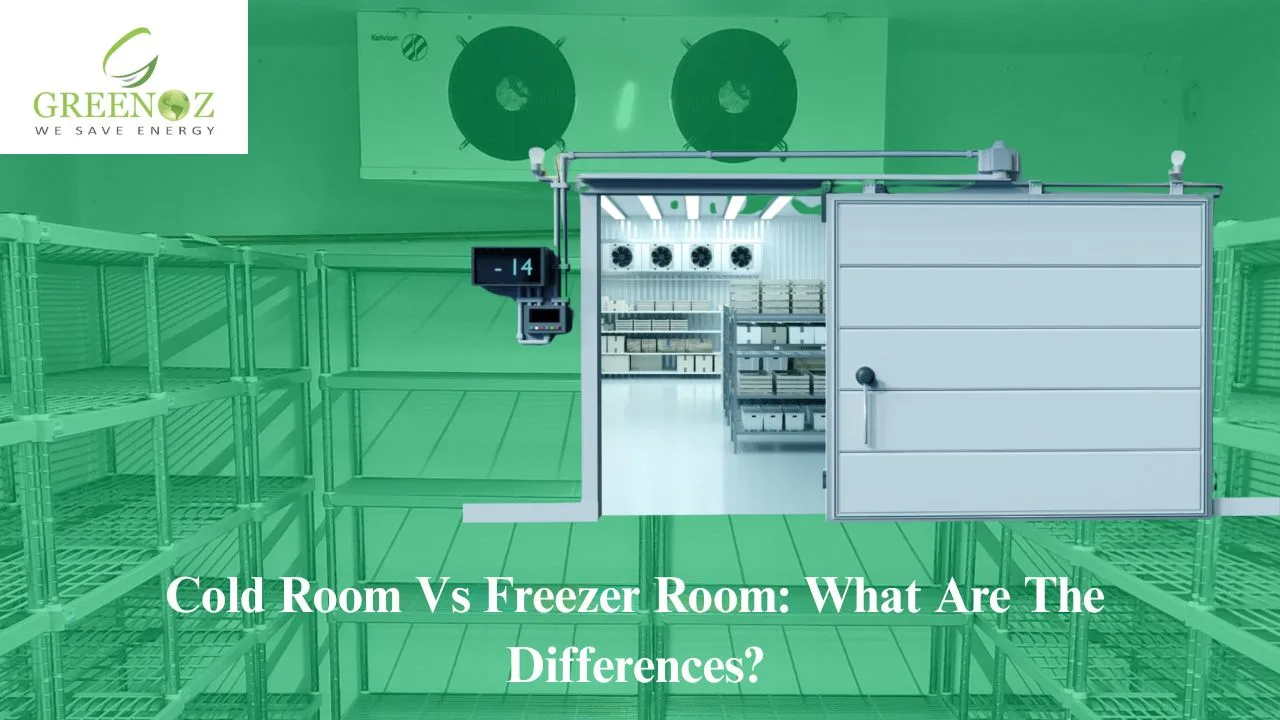
Greenoz Ventilation System Pvt. Ltd. offer advanced temperature-controlled storage solutions that help businesses preserve product quality, reduce waste, and maintain safety standards. We provide customized cold room solutions that are designed based on storage capacity, product type, and operating conditions, making them suitable for both small and large businesses. Two of the most commonly used storage systems in commercial and industrial sectors are the cold room and the freezer room. While both are designed to control temperature, their purpose, operating range, and applications are quite different. A properly designed cold room ensures consistent airflow, uniform cooling, and energy efficiency.
What Is a Cold Room?
A cold room is a temperature-controlled storage space designed to keep products cool but not frozen. The cold room temperature usually ranges between 0°C to 10°C, depending on the stored items. These rooms are widely used to preserve freshness, slow down bacterial growth, and extend the shelf life of perishable goods.
What Is a Freezer Room?
A freezer room is designed for deep freezing and long-term storage. The temperature inside freezer rooms typically ranges from -18°C to -40°C, which helps stop bacterial activity almost entirely. This makes freezer rooms ideal for storing meat, seafood, frozen vegetables, ice cream, and pharmaceutical products that require sub-zero conditions. A commercial freezer room is commonly used in food processing units, cold storage warehouses, hotels, supermarkets, and export industries.
Key Differences Between Cold Room and Freezer Room
- Temperature Range: The most significant difference lies in temperature control. A cold room operates above freezing, while a freezer room works at sub-zero temperatures. The selected system depends entirely on the storage requirement of the product.
- Purpose and Storage Duration: Cold rooms are best suited for short- to medium-term storage where freshness is critical. Freezer rooms, on the other hand, are designed for long-term preservation where freezing is required to prevent spoilage.
- Energy Consumption: Freezer rooms consume more energy than cold rooms due to lower operating temperatures. A commercial freezer room requires powerful refrigeration systems to maintain consistent freezing, while cold rooms are comparatively more energy-efficient.
- Construction and Insulation: Freezer rooms need thicker insulation panels, specialized doors, and stronger vapor barriers to prevent heat infiltration. Cold rooms require standard insulation but still focus on maintaining stable internal conditions.
- Product Compatibility: Not all products can be stored in freezer rooms. Items like fresh vegetables, fruits, and medicines may get damaged if frozen. Cold room temperature settings help preserve such sensitive items without altering their properties.
Applications of Cold Rooms
Cold rooms are widely used across various industries, including:
- Agriculture and horticulture for fresh produce storage
- Dairy and beverage industries
- Pharmaceutical and healthcare sectors
- Hotels, restaurants, and catering services
- Flower and seed storage facilities
Greenoz Ventilation System Pvt. Ltd. offer tailored cold room designs that ensure optimal temperature control and hygiene for different applications.
Also Read : VISI Cooler price
Applications of Freezer Rooms
Freezer rooms are essential in industries where freezing is mandatory, such as:
- Meat and seafood processing units
- Frozen food manufacturing
- Ice cream production and storage
- Export-oriented food businesses
- Large-scale cold storage warehouses
A well-designed commercial freezer room ensures uniform freezing, reduced product loss, and compliance with food safety regulations.
Difference Between Cold Room Vs Freezer Room
| Feature | Cold Room | Freezer Room |
|---|---|---|
| Temperature Range | Operates above freezing; cold room temperature usually ranges from 0°C to 10°C | Operates below freezing; typically ranges from -18°C to -40°C |
| Purpose | Used to keep products fresh without freezing | Used for deep freezing and long-term preservation |
| Stored Products | Fruits, vegetables, dairy, medicines, flowers | Meat, seafood, frozen foods, ice cream |
| Energy Consumption | Consumes less energy due to higher temperature settings | Consumes more energy to maintain sub-zero conditions |
| Industrial Usage | Common in hotels, restaurants, pharma, and agriculture | Widely used in food processing, cold storage, and commercial freezer room facilities |
How to Choose Between a Cold Room and a Freezer Room?
The choice between a cold room and a freezer room depends on several factors:
- Nature of the product being stored
- Required storage temperature
- Duration of storage
- Available space and budget
- Energy efficiency goals
Greenoz Ventilation System Pvt. Ltd. offer expert guidance, helping businesses select the most suitable system based on their operational needs.
A cold room is ideal for maintaining freshness at controlled temperatures, while freezer rooms are essential for deep freezing and long-term preservation. Understanding the differences between cold room temperature and freezer room conditions helps businesses improve efficiency, reduce waste, and protect product quality. Greenoz Ventilation System Pvt. Ltd. offer high-performance cold room and commercial freezer room systems that meet various industrial and commercial requirements. Choosing the right storage solution ensures better product safety, operational efficiency, and long-term business success.