
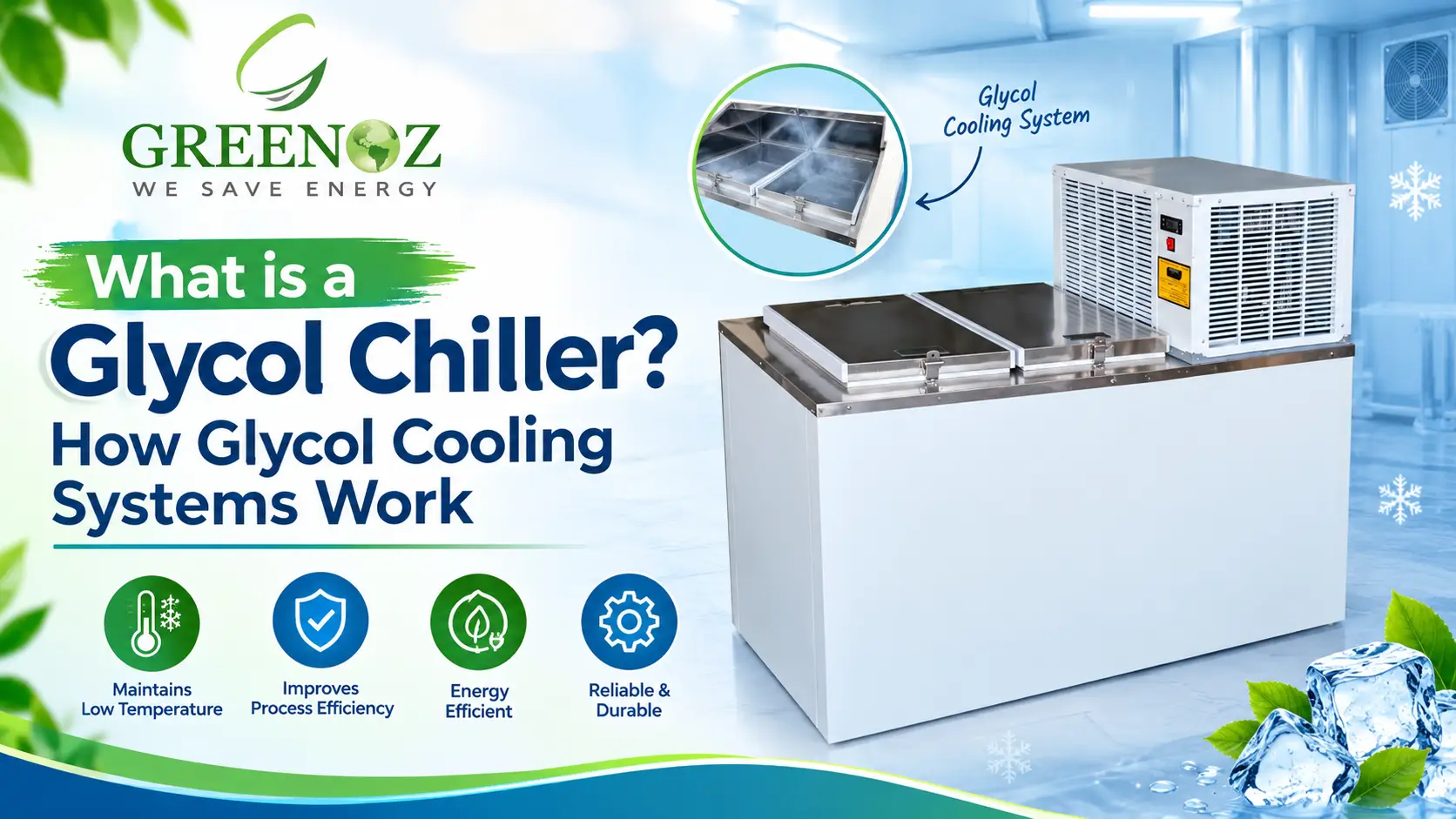
Greenoz Ventilation System understands the importance of reliable industrial cooling solutions. A well-designed glycol chiller system helps maintain consistent temperatures, improve process efficiency, and prevent freezing in cooling pipelines. These systems are widely used in food processing, pharmaceuticals, chemical production, and cold storage facilities. A glycol deep freezer application is also useful for specialized low-temperature requirements where precise temperature control and dependable cooling performance are essential for product quality, equipment protection, and smooth industrial operations.
What Is a Glycol Chiller?
A glycol chiller is a type of refrigeration equipment that circulates a water-glycol mixture through a cooling circuit. Glycol is added to water to lower its freezing point, allowing the liquid to remain usable at temperatures where ordinary water may freeze.
The two most common types of glycol used in cooling applications are ethylene glycol and propylene glycol. Ethylene glycol offers effective heat-transfer performance but is toxic and requires careful handling. A glycol water chiller is designed to cool this mixture and circulate it through heat exchangers, jackets, tanks, or other equipment. It provides controlled cooling for industrial processes that need dependable temperature management.
How Does a Glycol Chiller System Work?
The working principle of a glycol chiller system is similar to that of a standard refrigeration system. The cooling process generally involves the following steps:
- Heat Absorption: The glycol mixture circulates through the equipment or process that needs cooling. As it passes through the system, it absorbs heat from the product, machinery, or surrounding environment.
- Return to the Chiller: The warmed glycol solution returns to the chiller through a return pipeline. The system then transfers this absorbed heat to the refrigeration circuit through an evaporator or heat exchanger.
- Refrigeration Cycle: The refrigerant inside the chiller absorbs heat and evaporates. The compressor increases the refrigerant’s pressure, after which the condenser releases the heat to the surrounding air or cooling water.
- Cooling and Recirculation: The refrigerant returns to its liquid state through the refrigeration cycle, while the glycol solution is cooled again. A circulation pump sends the cooled mixture back to the application, and the cycle continues.
This continuous process helps maintain the required operating temperature and provides reliable cooling for different industrial applications.
Why Is Glycol Used in Chilled Water Systems?
The use of glycol in chilled water systems is important when cooling equipment operates in low-temperature conditions or when outdoor pipelines are exposed to freezing weather. Ordinary water can freeze and expand, potentially damaging pipes, valves, pumps, and heat exchangers.
The glycol used in chilled water systems helps lower the freezing point of the circulating liquid. This reduces the risk of ice formation and supports continuous cooling in demanding environments.
Other benefits include improved protection against freezing, reliable temperature control, and suitability for applications requiring below-zero cooling. However, adding too much glycol can increase viscosity and reduce heat-transfer efficiency. Therefore, the correct concentration should be selected according to the required temperature and equipment manufacturer’s recommendations.
Main Benefits of a Glycol Chiller System
A properly selected glycol chiller provides several advantages for industrial and commercial applications.
- Low-Temperature Cooling: These systems can maintain temperatures below the freezing point of water when designed for the required operating conditions.
- Freeze Protection: The glycol mixture helps protect cooling circuits from freezing, reducing the risk of pipeline and equipment damage.
- Consistent Temperature Control: A glycol chiller system supports stable cooling for processes that depend on specific temperature conditions.
- Industrial Versatility: It can be integrated with tanks, processing equipment, heat exchangers, and cold storage systems.
- Reliable Operation: Correct system sizing, regular maintenance, and suitable glycol concentration help maintain dependable cooling performance.
Applications of Glycol Chillers
Glycol chillers are used in industries where precise and dependable cooling is necessary.
- Food and Beverage Industry: Used for beverage production, fermentation, food processing, and cooling applications that require controlled temperatures.
- Pharmaceutical Industry: Supports temperature-sensitive manufacturing and selected process cooling requirements.
- Chemical Industry: Helps control temperatures during chemical processing and production.
- Cold Storage Facilities: Provides cooling support for refrigeration systems and specialized low-temperature applications.
- Plastic and Manufacturing Industries: Used to cool moulds, production machinery, and industrial equipment.
- Breweries and Wineries: Helps maintain suitable temperatures during fermentation and beverage processing.
How to Choose the Right Glycol Chiller
Selecting the right glycol chiller requires careful consideration of the cooling load, required supply temperature, ambient conditions, and type of industrial application. The glycol concentration should match the lowest expected operating temperature while maintaining suitable fluid flow and heat-transfer performance. Greenoz Ventilation System can help businesses evaluate their industrial cooling requirements and identify suitable cooling solutions for their applications. The right system selection depends on the process conditions, installation environment, and long-term operating requirements.
A glycol chiller is a practical solution for industrial processes that require low-temperature cooling and protection against freezing. From manufacturing and food processing to cold storage and chemical production, glycol cooling technology supports a wide range of applications. Greenoz Ventilation System aims to offer suitable industrial cooling solutions that help businesses maintain reliable operations, improve temperature control, and meet their process cooling requirements. With proper design, installation, and maintenance, a glycol chiller system can provide dependable performance over the long term.