Greenoz Ventilation System Pvt. Ltd. understands the importance of reliable temperature control in commercial food storage environments. The right ice cream storage setup can help businesses protect product quality while improving storage efficiency and reducing unnecessary energy consumption. For commercial businesses such as ice cream parlours, restaurants, cafés, supermarkets, and food manufacturing units, choosing the right freezer and maintaining the correct temperature is especially important.
What Temperature Should Ice Cream Be Stored At?
The recommended ice cream freezer temperature is generally around -18°C (0°F) or lower for long-term frozen storage. At this temperature, ice cream remains properly frozen while maintaining its desired consistency.
For commercial storage, businesses may use temperatures between approximately -18°C and -25°C, depending on the type of freezer, storage duration, product formulation, and operating requirements. Maintaining a stable temperature is just as important as reaching a low temperature. A reliable commercial ice cream freezer temperature should therefore be monitored regularly. Businesses can use built-in digital displays, temperature sensors, or monitoring systems to identify temperature changes before they affect stored products.
What Temp Does Ice Cream Freeze?
Ice cream does not freeze at exactly the same temperature as water. Because it contains ingredients such as sugar, milk fat, proteins, and other solids, its freezing point is lower than 0°C.
Generally, ice cream begins to freeze at temperatures below 0°C, but it remains partially soft because not all of its water freezes. Commercial ice cream is usually stored at much lower temperatures to maintain its proper structure and serving quality.
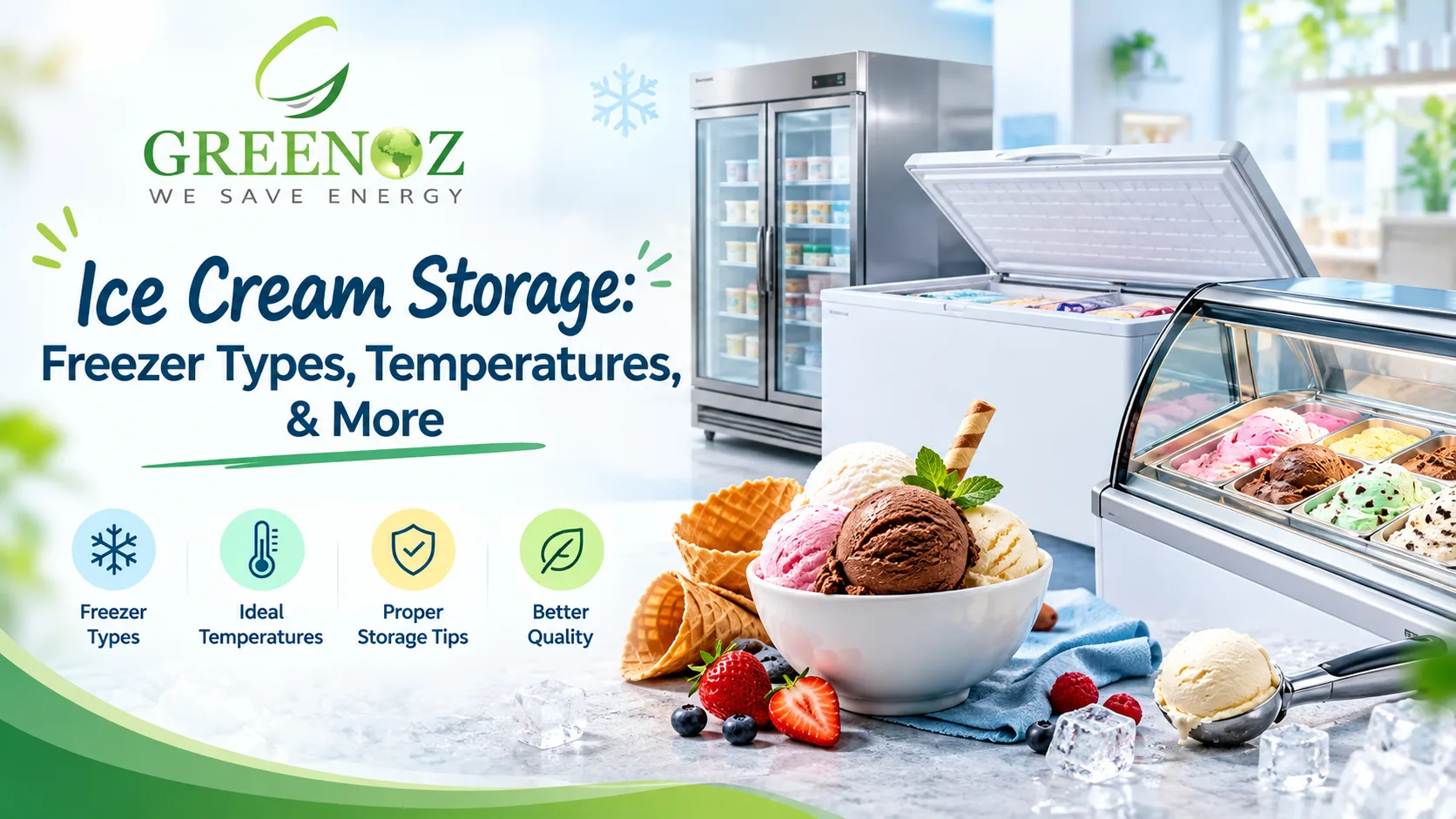
Types of Freezers Used for Ice Cream Storage
Different businesses require different freezer designs depending on their storage capacity and operational needs.
- Chest Freezers: Chest freezers are commonly used for storing packaged ice cream and frozen food products. Their horizontal design provides good insulation and can help reduce cold-air loss when the lid is opened.
- Upright Freezers: Upright freezers are useful where floor space is limited. These freezers are often preferred by retail stores, cafés, and commercial kitchens where product organization is important.
- Display Freezers: Display freezers are designed for businesses that sell ice cream directly to customers. They allow customers to see the available products while maintaining the required frozen environment.
- Commercial Reach-In Freezers: Reach-in freezers are designed for professional food-service environments. They generally provide organized storage with multiple shelves and are suitable for businesses handling larger quantities of frozen products.
- Walk-In Freezers: For businesses with significant storage requirements, walk-in freezers provide a much larger controlled environment. They can be designed according to available space and required storage capacity.
Best Freezer Temperature for Ice Cream
The best freezer temperature for ice cream depends on whether the product is being stored for long-term preservation or kept ready for serving. For general frozen storage, approximately -18°C (0°F) is a common target. However, commercial operations may maintain lower temperatures depending on their freezer design and product requirements. For serving, ice cream may need to be slightly warmer than its deep-storage temperature so that it can be scooped easily. The exact serving temperature depends on the formulation and equipment being used.
Businesses should always follow the storage recommendations provided by the ice cream manufacturer. Different formulations can behave differently because sugar, fat, stabilizers, and other ingredients influence freezing characteristics.
How to Maintain Proper Ice Cream Storage
Businesses can follow several simple practices to maintain suitable frozen storage conditions:
- Check freezer temperatures regularly.
- Avoid overloading the freezer.
- Keep freezer doors closed whenever possible.
- Maintain proper airflow around stored products.
- Clean and inspect refrigeration equipment regularly.
- Check door seals for damage or air leakage.
- Use temperature monitoring devices for larger storage areas.
- Follow the manufacturer’s recommended storage temperature.
Proper ventilation around refrigeration equipment is also important because heat generated by refrigeration systems needs to be effectively managed. We can offer solutions designed to support better ventilation and controlled environments for commercial and industrial facilities.
Choosing the appropriate freezer, maintaining a stable temperature, and ensuring suitable ventilation can all contribute to better product quality and efficient operation. Whether a business needs a display freezer for customer-facing sales or a larger commercial freezing environment for bulk storage, temperature control should always be a priority. Maintaining an appropriate ice cream freezer temperature helps preserve the creamy texture and overall quality that customers expect.
With the right storage practices and suitable environmental systems, businesses can protect their frozen products and operate more efficiently. Greenoz Ventilation System Pvt. Ltd. can offer professional ventilation solutions for commercial and industrial environments where effective airflow and temperature management are important.