Greenoz Ventilation System understands that freezing is one of the most important stages in producing high-quality ice cream. It is during this stage that a liquid mix gradually transforms into the smooth, creamy, and enjoyable product loved by consumers. The freezing process directly affects texture, consistency, overrun, crystal size, and the final appearance of ice cream. A well-controlled freezing and hardening process helps manufacturers maintain product quality from production to storage and distribution.
The process may appear simple, but many technical factors are involved. Temperature control, agitation, cooling speed, air incorporation, and the performance of the ice cream hardener all play important roles. Greenoz Ventilation System can offer reliable solutions that support efficient cooling and hardening for ice cream manufacturing applications.
Freezing Process in Ice Cream Production
Ice cream production generally begins with preparing a carefully balanced mixture containing ingredients such as milk or cream, sugar, stabilizers, emulsifiers, and flavouring materials. After mixing, the product is pasteurized and homogenized to improve its structure.
During freezing, the ice cream mix is cooled while being continuously agitated. Part of the water present in the mixture forms tiny ice crystals. At the same time, air is incorporated into the product, which contributes to the light and creamy structure of the finished ice cream.
Methods Used for Freezing Ice Cream
Different freezing methods may be used depending on production capacity, product type, and manufacturing requirements.
1. Batch Freezing
Batch freezing is commonly used for smaller production volumes and specialized ice cream products. A measured quantity of ice cream mix is added to a batch freezer, where it is cooled and agitated until the desired consistency is achieved.
2. Continuous Freezing
Continuous freezing is widely used in medium and large ice cream plants. In this method, the ice cream mix enters the freezer continuously, where it is rapidly cooled while air is incorporated.
Continuous freezing supports higher production speeds and helps maintain consistent product quality. The temperature and overrun can be controlled more precisely, making this method suitable for industrial production.
3. Hardening Process
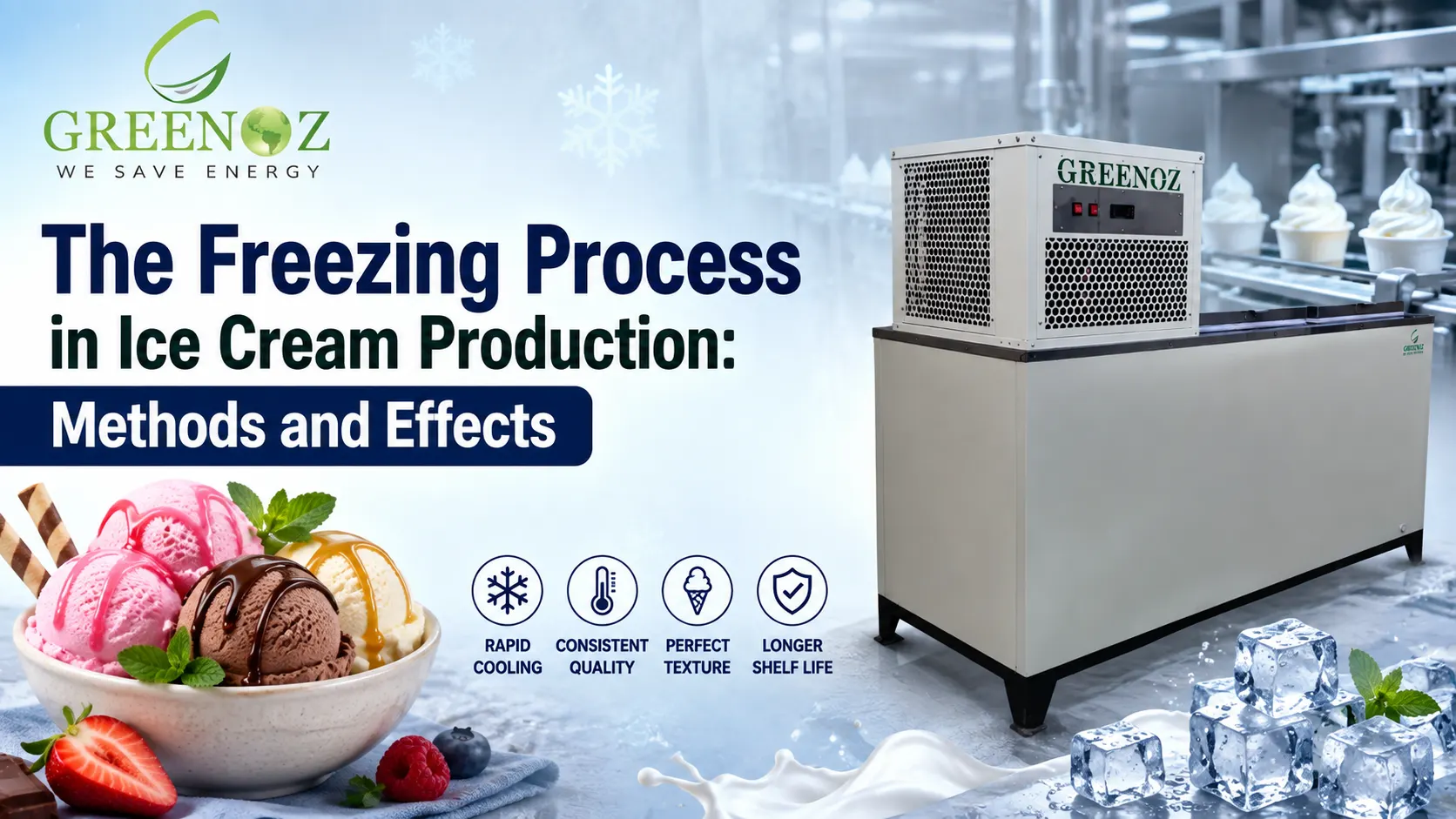
After initial freezing, ice cream is still relatively soft. This is where an ice cream hardener becomes extremely important. The product must be rapidly cooled to a much lower temperature so that the remaining water can freeze and the structure of the ice cream can become stable.
Greenoz Ventilation System can offer cooling and hardening solutions designed to support the needs of modern ice cream manufacturers.
Effects of Freezing on Ice Cream Quality
The freezing process has a major effect on the final quality of ice cream. Even small variations in cooling speed or temperature can influence texture and overall consumer experience.
Ice Crystal Size
The size of ice crystals is one of the most important factors in ice cream quality. Rapid freezing generally creates smaller crystals, resulting in a smoother texture. Slow freezing can allow crystals to grow larger, producing an icy and less desirable product.
Texture and Creaminess
Ice cream is expected to have a smooth and creamy texture. This depends on the proper combination of fat, air, ice crystals, and the unfrozen portion of the mixture. Controlled freezing and hardening help maintain this balance.
Air Incorporation
During the freezing process, air is incorporated into the ice cream. This is known as overrun. The amount of air affects the volume, density, and texture of the product.
Too little air can result in a heavy and dense ice cream, while excessive air may reduce the richness of the product. Therefore, manufacturers need proper control during continuous or batch freezing.
Product Stability
A properly frozen and hardened product is more stable during storage and transportation. When ice cream does not harden quickly enough, temperature fluctuations can lead to changes in crystal structure.
An efficient ice cream hardener helps bring the product to the required storage condition quickly, supporting better quality and reduced product deterioration.
Factors That Influence Freezing Performance
Several factors influence the overall freezing process:
- Composition of the ice cream mix
- Freezing temperature
- Speed of heat removal
- Agitation during freezing
- Amount of air incorporated
- Product filling and packaging
- Hardening time
- Airflow inside the hardening area
- Refrigeration system performance
A well-designed ice cream hardener is especially important because it supports rapid temperature reduction after the initial freezing stage.
The freezing process is the heart of ice cream production. From creating small ice crystals to incorporating air and achieving a smooth texture, every stage requires careful control. Initial freezing creates the basic structure, while rapid hardening stabilizes the final product.
An efficient ice cream hardener is essential for preserving texture, improving product stability, and preparing ice cream for cold storage and distribution. Greenoz Ventilation System can offer dependable and customized solutions to support the requirements of modern ice cream manufacturers. With proper freezing technology and effective hardening, businesses can produce consistently smooth, stable, and high-quality ice cream for their customers.